Showing posts with label Goldman Sachs. Show all posts

Tuesday, June 15, 2010

Growing Web of Risks in Today's Business World

As many companies look to better understand the complex risks within their organization, recent events are pointing to the increasing need to understand the even more complex risks posed by partner organizations. Richard Thaler, professor of economics and behavioral science at the University of Chicago, provided his view in the New York Times this week.
AS the oil spill in the Gulf of Mexico follows on the heels of the financial crisis, we can discern a toxic recipe for catastrophe. The ingredients include risks that are erroneously thought to be vanishingly small, complex technology that isn’t fully grasped by either top management or regulators, and tricky relationships among companies that are not sure how much they can count on their partners.

For the financial crisis, it has become clear that many chief executives and corporate directors were not aware of the risks taken by their trading desks and partners. Recent accusations against Goldman Sachs suggest the potential for conflicts of interest among banks, investors, hedge funds and rating agencies. And it is clear that regulators like the Securities and Exchange Commission, an agency staffed primarily with lawyers, are not well positioned to monitor the arcane trading strategies that helped produce the crisis.

The story of the oil crisis is still being written, but it seems clear that BP underestimated the risk of an accident. Tony Hayward, its C.E.O., called this kind of event a “one-in-a-million chance.” And while there is no way to know for sure, of course, whether BP was just extraordinarily unlucky, there is much evidence that people in general are not good at estimating the true chances of rare events, especially when human error may be involved. There was another major blow-out in the gulf 31 years ago by the Mexican rig Ixtoc I. So was this really a one-in-a-million risk?

In the current spill, the problems of assessing risk were complicated by the teamwork required among BP; Transocean, which owned the rig; and Halliburton, which had provided services like concrete work. “Of the 126 people present on the day of the explosion, only eight were employees of BP,”reported Ian Urbina in The New York Times. “The interests of the workers did not always align.”

Certainly, before a company can fully understand the growing web of internal and external risks inherent in their business activities, the company must have a disciplined approach to risk management. A strong enterprise risk management program can help in this regard. If your company is looking to implement or improve its enterprise risk management program, Wheelhouse Advisors can help. Visit www.WheelhouseAdvisors.com to learn more.

Sunday, April 18, 2010

Reputation Is Everything

In last month's issue of Operational Risk & Regulation magazine, Goldman Sachs' operational risk management program and its focus on reputational risk was profiled.  The article focused on Goldman Sachs' use of scenario analysis in anticipating the magnitude of reputational risk events.  Scenario analysis exercises such as these are very useful tools to increase the risk awareness within an organization.  Here is a summary of Goldman Sachs' approach.
Goldman Sachs is using scenario analysis to study reputational risk, employing operational risk expertise within its broader risk management framework, according to its global co-heads of operational risk management, Spyro Karetsos and Mark D'Arcy.  The bank says it embraces events, even those creating more reputational risk exposure than financial risk exposure, into its framework.  "Franchise value is highly important within the organisation and managing reputational risk is a by-product of that," says Karetsos, who is based in New York. "While it is not our responsibility to quantify reputational risk, there is an internal process that measures our exposure to those risks that are difficult to quantify, one of which is reputational risk."

The timeliness of this story is ironic given the potential massive impact to the bank's reputation as a result of the fraud charges levied by the Securities and Exchange Commission on Friday.  Once the announcement was made, the bank lost close to $12.5 billion in shareholder value by the end of the trading day.  Whether that loss can be overcome remains to be seen.  However, it does prove that in business, reputation is everything.

Monday, April 13, 2009

Race to the Top

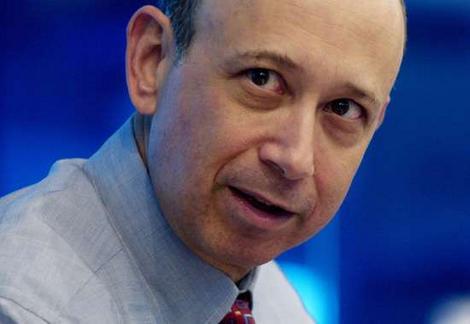
As highlighted in an ERM Current™ blog entry last week, Goldman Sachs' CEO Lloyd Blankfein delivered a speech to the Council of Institutional Investors regarding his views on what contributed to the current financial crisis.  He offered a challenge to other financial institutions in his closing remarks below.
Though honest disagreements will occur, the best companies don't shy away or selfishly frustrate efforts to compel better industry practices. These companies recognize that they are the first to benefit from better standards, especially if their business requires extensive dealings with partners or counterparties. But, we have to recognize a higher responsibility: to speak up, to draw attention to potentially destabilizing trends and to act like an owner responsible for the integrity of the system.

During the past several years, we have witnessed a "race to the bottom" in terms of poor decision making, lax risk controls and weak regulation.  Let's hope Mr. Blankfein's viewpoint signals the beginning of a new "race to the top".

goldman_sachs

Wednesday, April 8, 2009

Tough Talk on Pay and Risk

Today, the Wall Street Journal reported that Goldman Sachs' CEO Lloyd Blankfein called on financial institutions and regulators to take a tougher approach to link compensation and risk taking.  Here's what he had to say in a speech yesterday to the Council of Institutional Investors.
When deciding on pay for traders, bankers and other employees, Wall Street firms should take into account not only the contribution the employee made to profit or loss, but also the risks taken and the overall contribution to the better functioning of markets. The evaluation "must be made on a multiyear basis to get a fuller picture of the effects of an individual's decision," Mr. Blankfein added. Regulations should get tougher in bull markets, he added, much like the Federal Reserve tries to keep the economy from overheating, he said.

This is a refreshing point of view from one of the top CEOs.  It remains to be seen if other top executives will view the situtation in a similar light.  

goldmansachsceolloydblankfien